01. The host runs the graph.
You write the agent. We execute the workflow: deterministic steps, tool calls, waits, and approvals. Crash safety, retries, and resume are part of the host, not a side project.
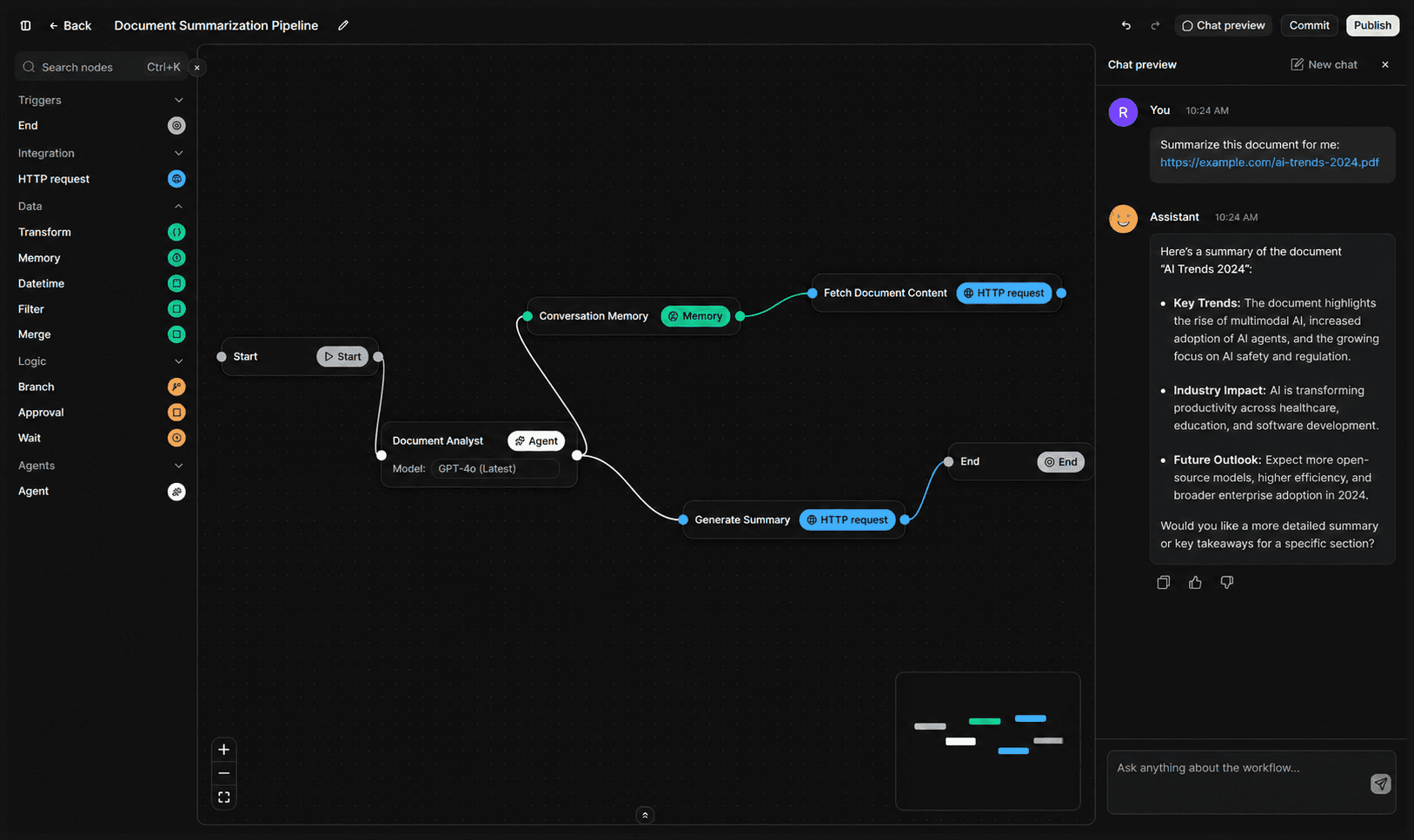
The runtime and control plane for production agents
You ship the agent. Linea executes the graph, holds the checkpoint, and gives you the loop to diagnose a failure, replay it, and publish a fix.
Linea runs the graph. Every step is checkpointed, failures retry, and an interrupted execution resumes from the last successful node.
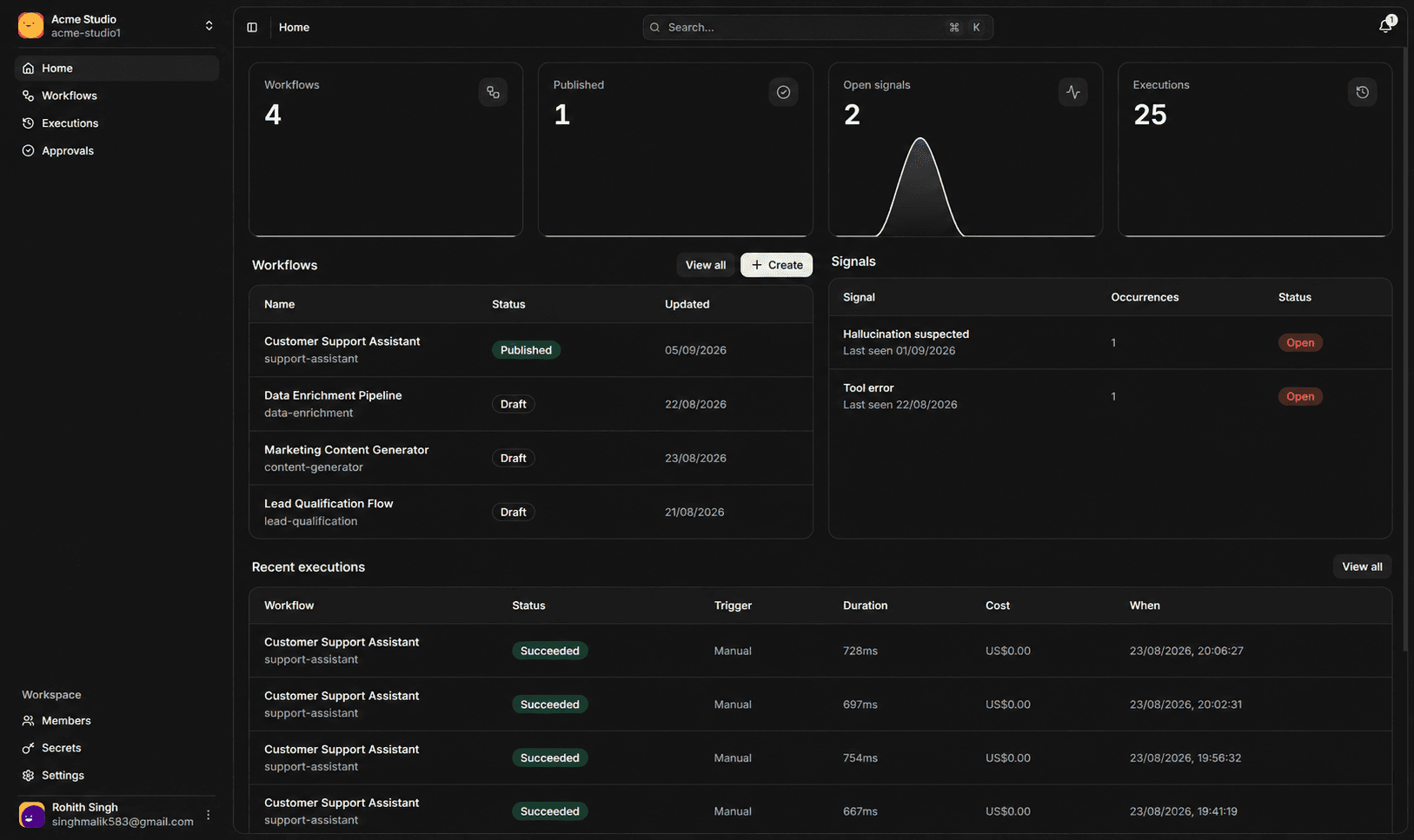
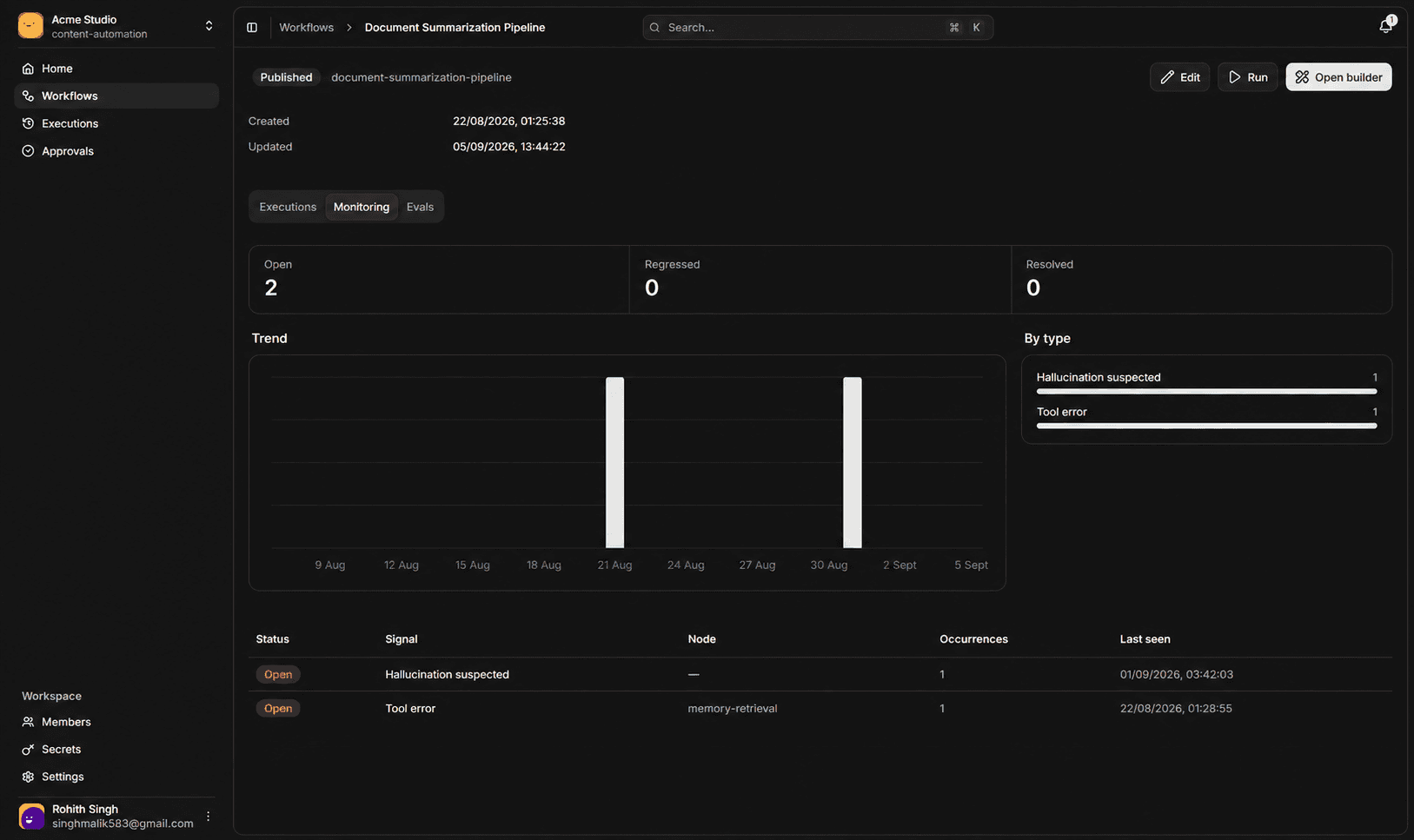
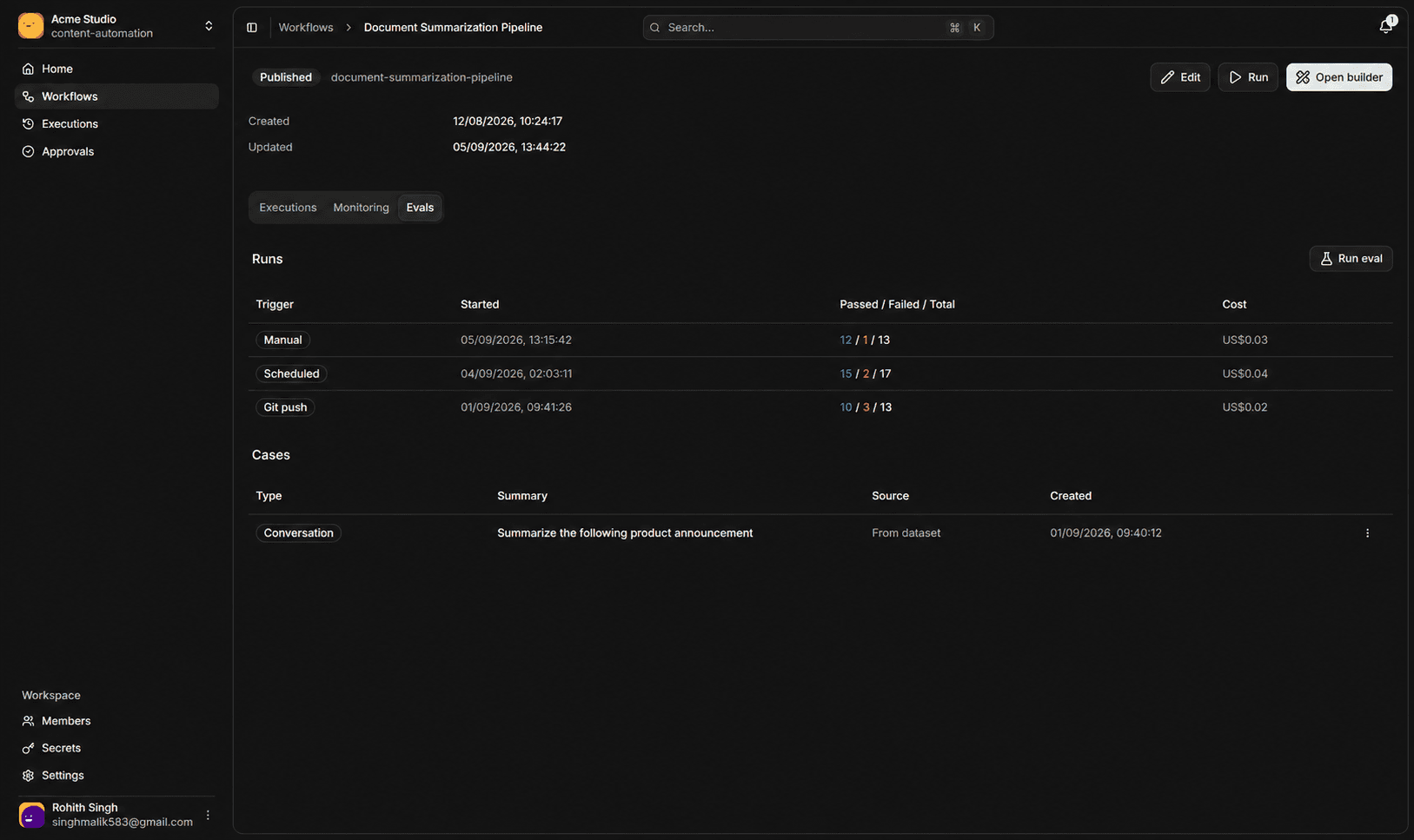
Replay the failing step against the exact input it saw. Freeze it as a case, publish, and check you did not break anything else.
Facts and workspace knowledge live with the run, so the next execution can read what the last one learned.
Draw it in the builder or write it in the SDK. Both emit the same workflow definition — the executable graph behind the agent.
The host runs the graph, retries on failure, and writes a checkpoint after every node. That record is what replay reads from.
Signals, approvals, and the fix loop sit on the same data model. This is a control plane, not another automation tool.
You write the agent. We execute the workflow: deterministic steps, tool calls, waits, and approvals. Crash safety, retries, and resume are part of the host, not a side project.
Because we executed the run, we hold the checkpoint. Change a prompt or model on step four and run that node again against the input it originally saw. Nothing upstream has to move.
Facts and workspace knowledge live on the host. The next execution can read what the last one learned, without a store and a retrieval pipeline for every graph.
Who it is for
Technical builders first. You write the agent. We execute the graph and keep the records that let you diagnose, replay, and ship a fix.
Technical founders
Durable execution, an agent framework, observability, evals, and a memory store are five products you would otherwise wire yourself. Linea is those on one data model.
AI engineers
A flag fires on an execution. Replay that node against the input it originally saw. Freeze it as a regression case, publish, and check you did not break the rest.
Builders who operate the run
LangGraph writes the loop. You still host it. Linea executes the graph and keeps the control plane: checkpoints, signals, approvals, and the records around the run.
Notes on the host, the checkpoint, and the loop after a failure.
You cannot re-run step four without the exact input it saw. That input only exists if the host executed the run.
Linea Labs
Aug 18, 2026
The canvas, the workflow JSON, and the node registry describe one thing. Pick the surface. Do not pick a second product.
Linea Labs
Aug 12, 2026
Frameworks solve the loop. You still host, retry, store memory, and sandbox. That second half is the product.
Linea Labs
Aug 4, 2026
Questions
Linea is an agentic runtime and control plane. You ship an agent to your users. Linea executes the workflow graph behind it — model calls, tools, waits, approvals, memory, and sandboxed code — and keeps the records around the run: checkpoints, signals, approvals, and regressions.
No. Workflow is the precise name for the executable graph, not the product category. An agent may use several workflows; some graphs are intentionally non-agentic. External positioning is build and operate production agents. Workflow terminology stays underneath where it is technically accurate.
Those products execute automations and compete on visual simplicity. They get thin when a step needs real code or an agent loop, and they have no signal or regression layer. Linea executes the graph so it can hold the checkpoint, replay one step, and keep the control plane around the run.
A framework helps you write the loop. You still host the process, store checkpoints, keep memory, and operate the result. Linea is that host and control plane. Keep the prompts and tools you already have; we execute the graph.
Because Linea executes the graph, it holds the checkpoint: the exact input a node received. Replay runs that one step again against that input. No deploy, no reproducing state, no re-running the steps before it. An observability vendor can show the failure; it never ran the graph, so it has no checkpoint to replay from.
No. The builder and the TypeScript SDK are two views of the same workflow definition. Pick the surface. Do not pick a second product.
Start building with Linea
You write the logic unique to the problem. We execute the graph and keep the control plane around the run.
Linea Labs © 2026