A crash resumes the run
When the worker holding the lease dies, another worker starts from the last checkpoint. Completed steps stay completed. The step that was in flight runs again.
Architecture
Linea executes the version you published. It does not observe a loop running somewhere else, so the checkpoint belongs to the host.
What runs
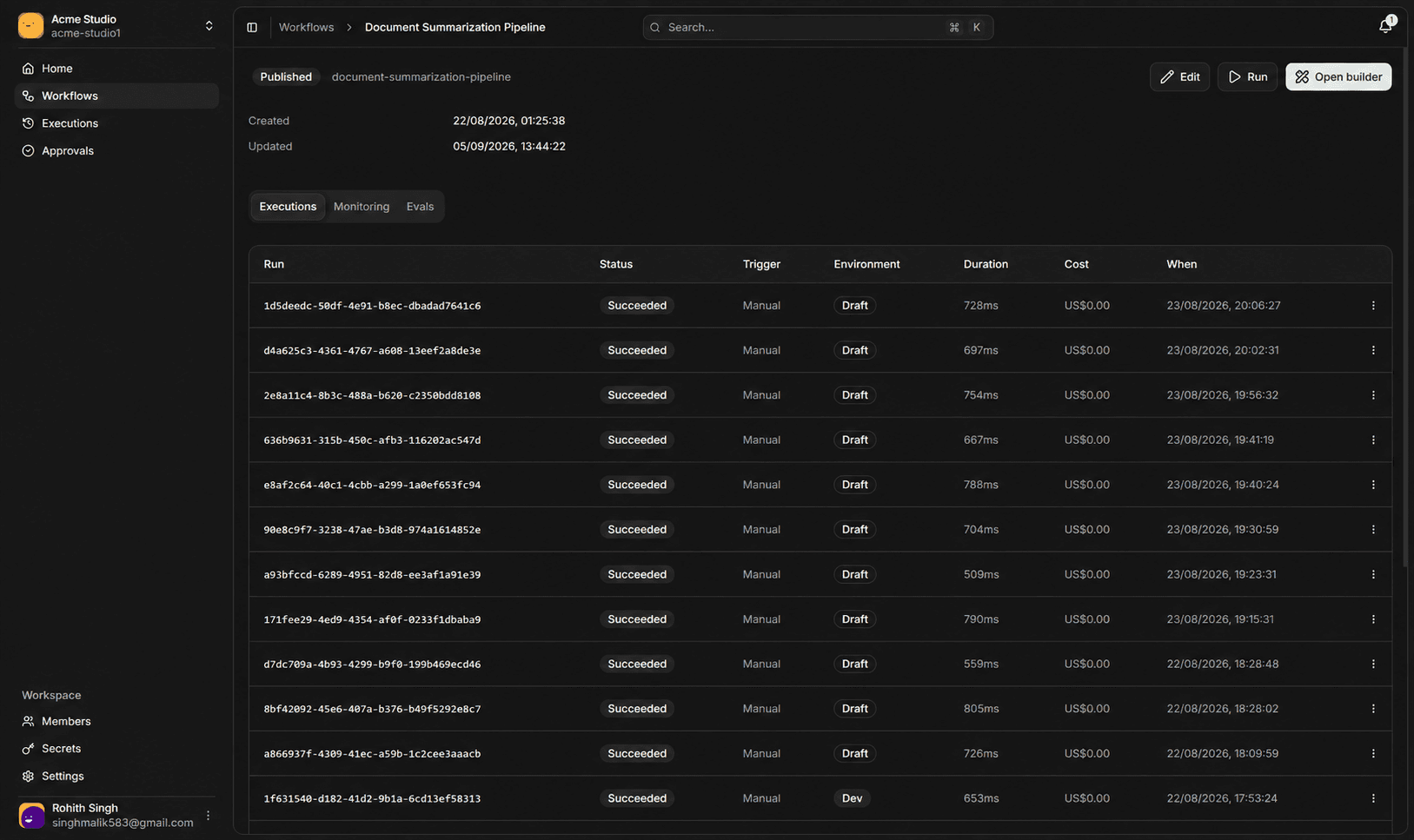
The same node ids are on the canvas, in the checkpoint, and in the replay target.
The builder saves the workflow as a document. Publish freezes a version. Checkpoints, replay, and regression cases all use the node ids in that version.
A manual run, a webhook, a schedule, or the TypeScript SDK starts one execution of the published version. Starting the graph is not the product. The run after that is.
Queue-backed workers hold a lease on the run they are executing. If a worker dies, the lease expires and another worker picks the run up.
Each finished node records its input and output. Resume continues from the last successful step. Replay loads that same input for one node.
When the worker holding the lease dies, another worker starts from the last checkpoint. Completed steps stay completed. The step that was in flight runs again.
An approval or a wait pauses the execution at the checkpoint until someone decides or a timer fires. The run then continues from that step. It does not start over.
From the blog
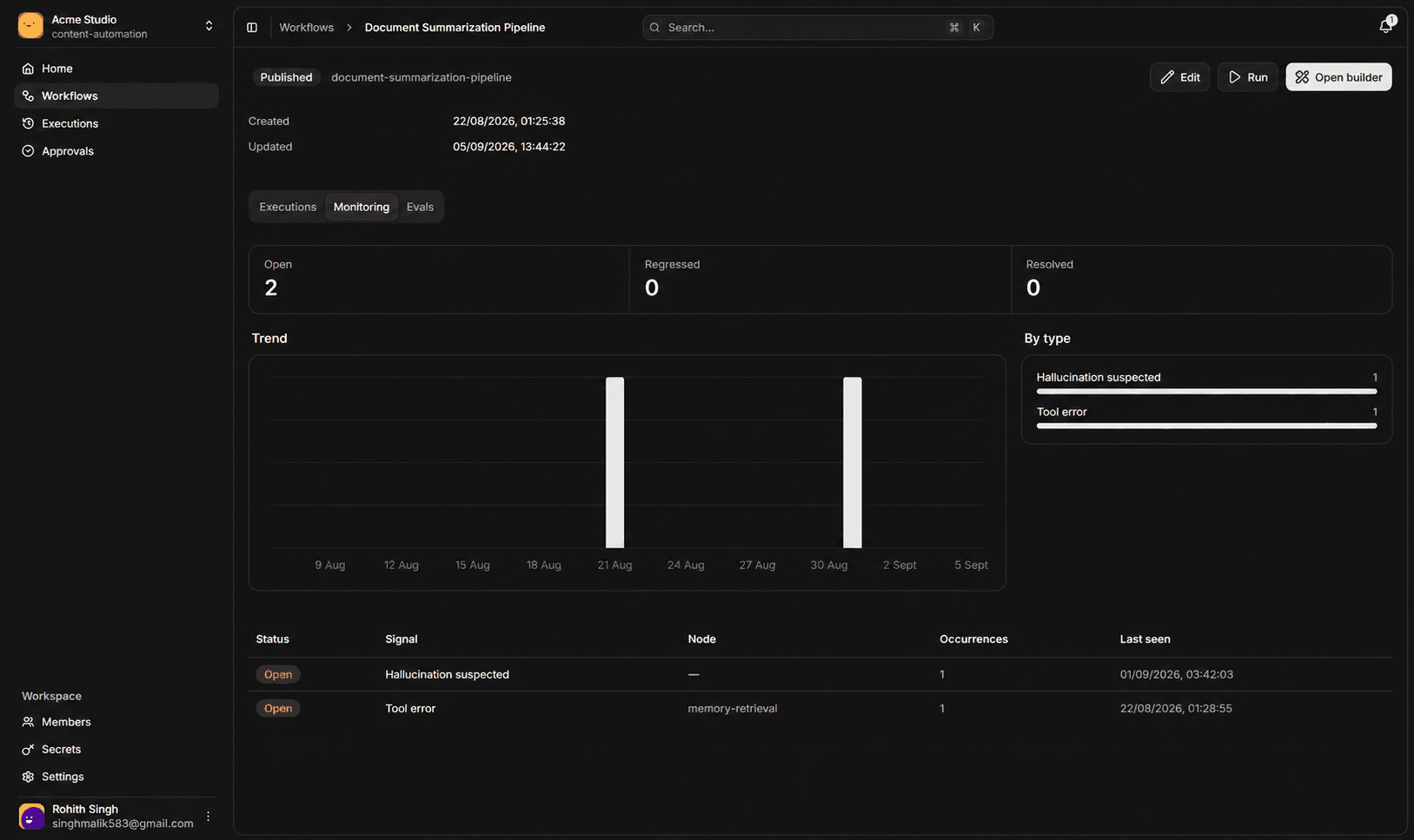
A paused run releases its lease and holds no worker. It waits until someone decides, then the approval node returns the decision and the run continues from that step.
Linea Labs
Nov 17, 2026
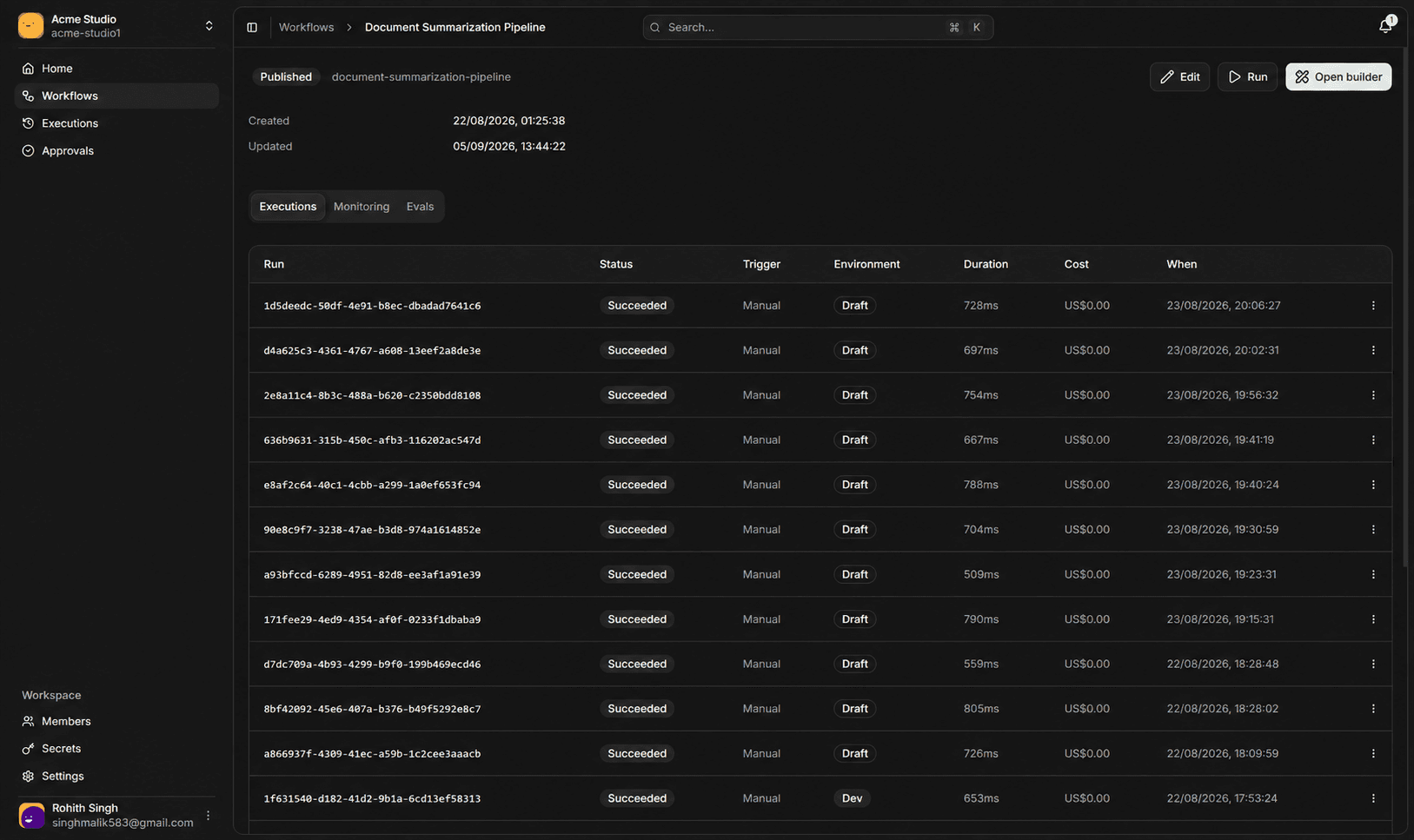
An execution records its workflow version once, when it starts, and never follows a live pointer. That is why resume and replay still mean something weeks after a graph has changed.
Linea Labs
Nov 17, 2026
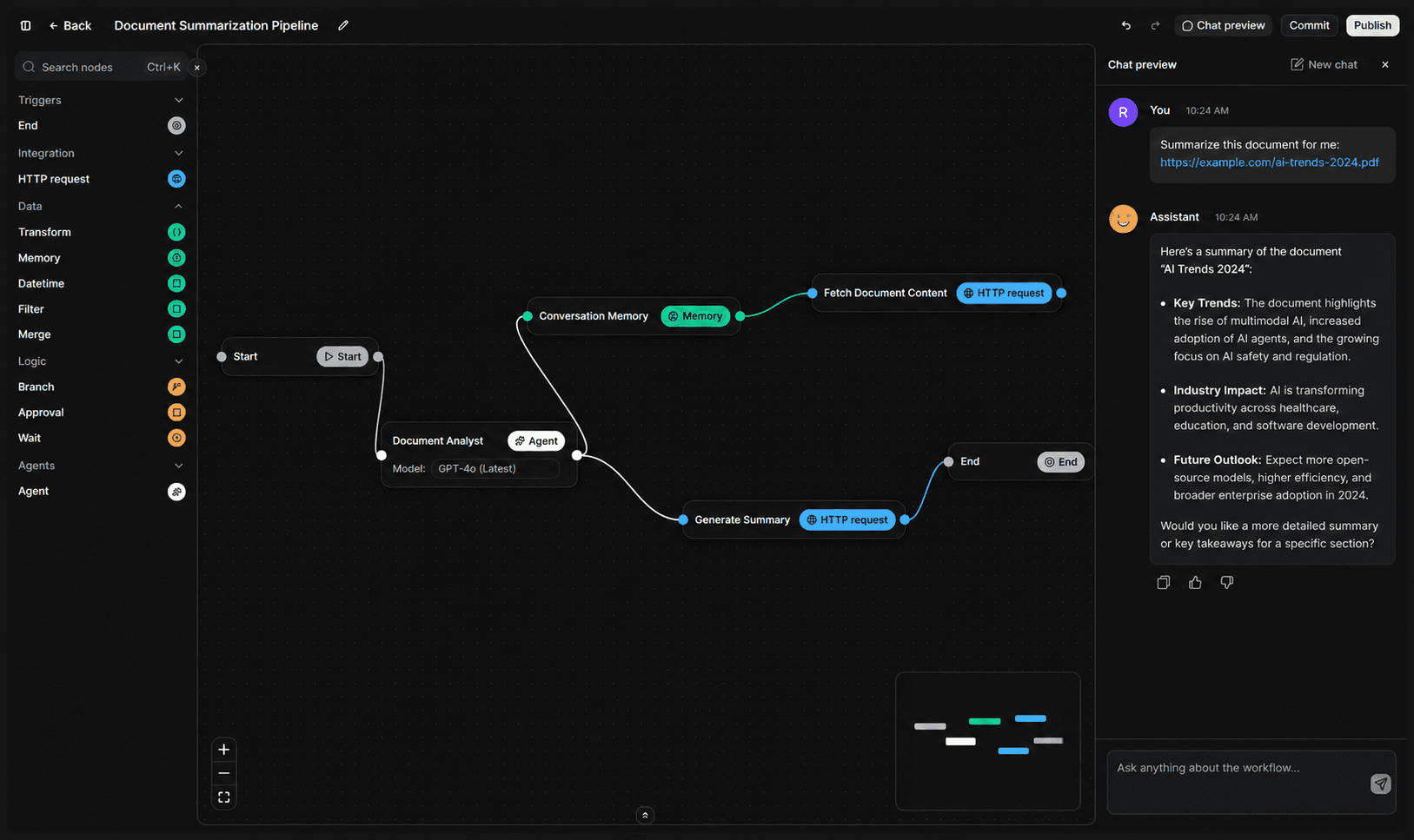
A worker holds a 30 second lease and renews it every 10 seconds. If it dies, the lease expires, another worker claims the run, and the run resumes from the last checkpoint.
Linea Labs
Nov 17, 2026
Questions
A framework helps you write the loop. You still host the process, store checkpoints, keep memory, and operate the result. Linea is that host and control plane. Keep the prompts and tools you already have; we execute the graph.
Linea is an agentic runtime and control plane. You ship an agent to your users. Linea executes the workflow graph behind it — model calls, tools, waits, approvals, and memory — and keeps the records around the run: checkpoints, signals, approvals, and regressions.