SDK
Start the run from your app.
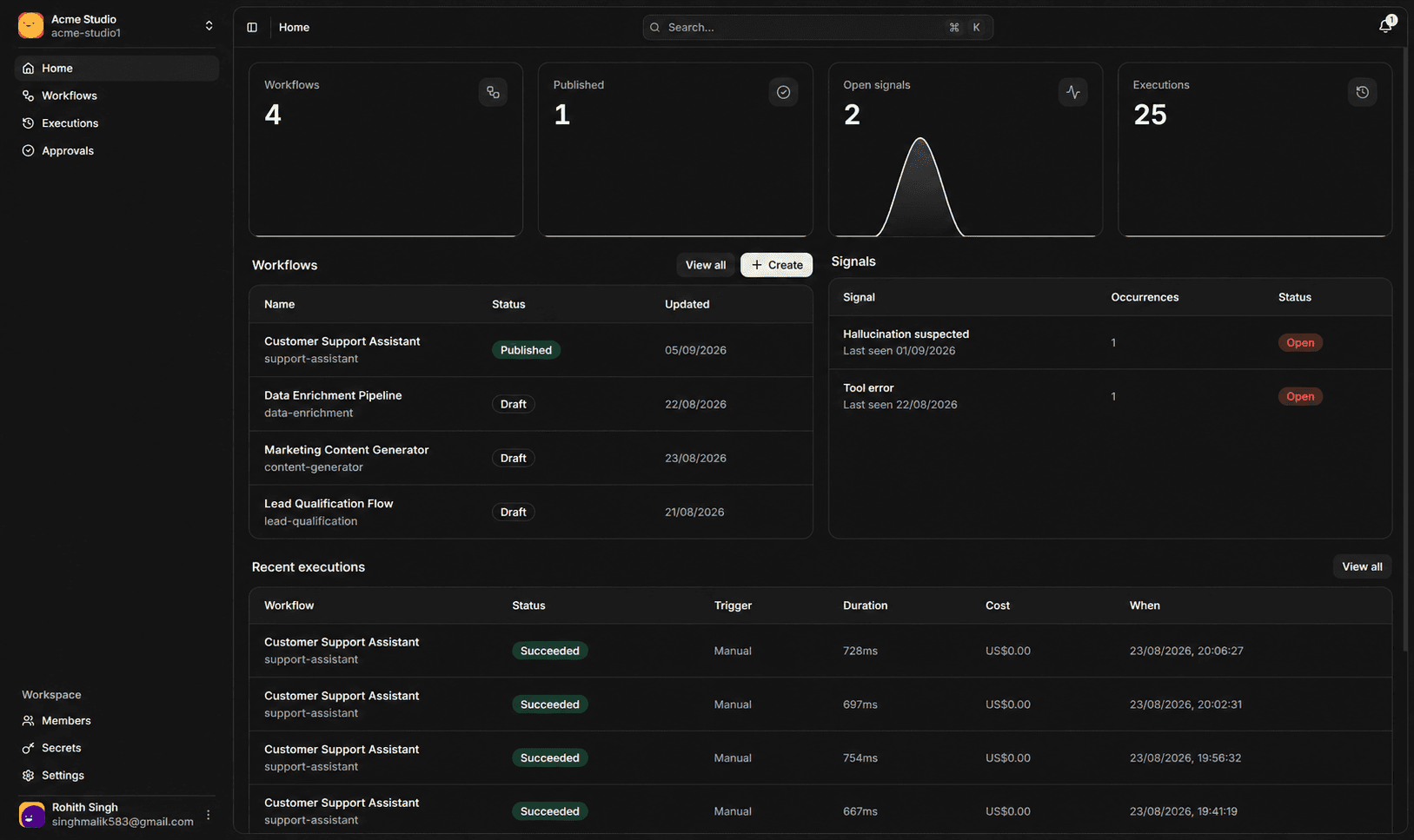
The SDK is TypeScript. It starts executions and reads them back, and a server key can create workflows and save drafts and versions. Publishing needs a signed-in admin in the dashboard, and the host runs the version that was published.
- the only SDK: there is no Python client
- TypeScriptthe only SDK: there is no Python client
- what it does: starts executions and reads each step's record back
- Start + readwhat it does: starts executions and reads each step's record back
- the SDK can save drafts and versions, but publishing and binding an environment need a signed-in admin
- Admin publishesthe SDK can save drafts and versions, but publishing and binding an environment need a signed-in admin
- verified by the SDK, alongside starting and reading runs
- Webhooksverified by the SDK, alongside starting and reading runs
The handoff
Three things cross from your app to the host.
- 01
Name the version
When you publish, the builder freezes the workflow as a version: the graph the host will run. Your app names that version and asks the host to start one execution of it, so the graph you reviewed is the graph that runs.
- 02
Pass the input
The start carries the input the trigger expects: a webhook body, the fields the first node reads, or the id of the person the run is for. It is data for the graph, not a description of it. Prompts, tools, and edges stay on the host.
- 03
Read the record
As the run proceeds, the host writes each step's input and output onto the execution. The SDK reads that record back: the same record you see in the run, and the same checkpoint replay loads for one node.
One graph
Your app starts the run. An admin publishes the graph.
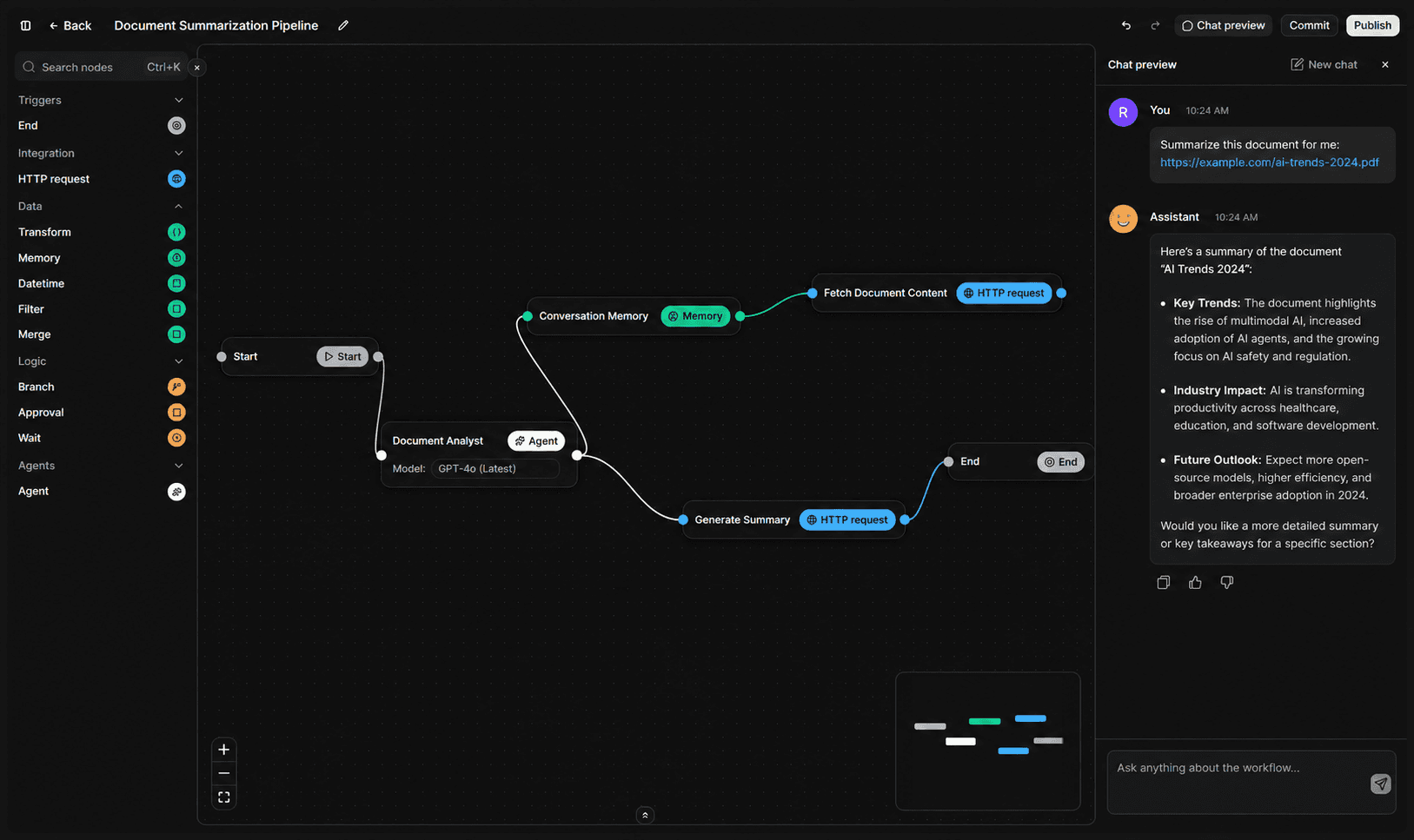
If the nodes in a run are not the nodes on the canvas, replay has nothing to target. The SDK can prepare a draft or a version, but only an admin publishes one, and the host runs that published version.
01
What the SDK does
Start an execution and read each step's record back. A server key can also save drafts and versions.
02
What an admin does
Publishing a version and binding an environment need a signed-in admin. The host runs that version.
03
TypeScript only
There is no Python client. A payload sample in another language is an example of the body, not an SDK.
From the blog
Keep reading.
Which Linea client to use, and which key goes where
The TypeScript SDK has a server client, an environment client for production starts, an end-user client for browsers, and a webhook verifier. Each one takes a different credential.
Linea Labs
Nov 17, 2026
One graph, not two products
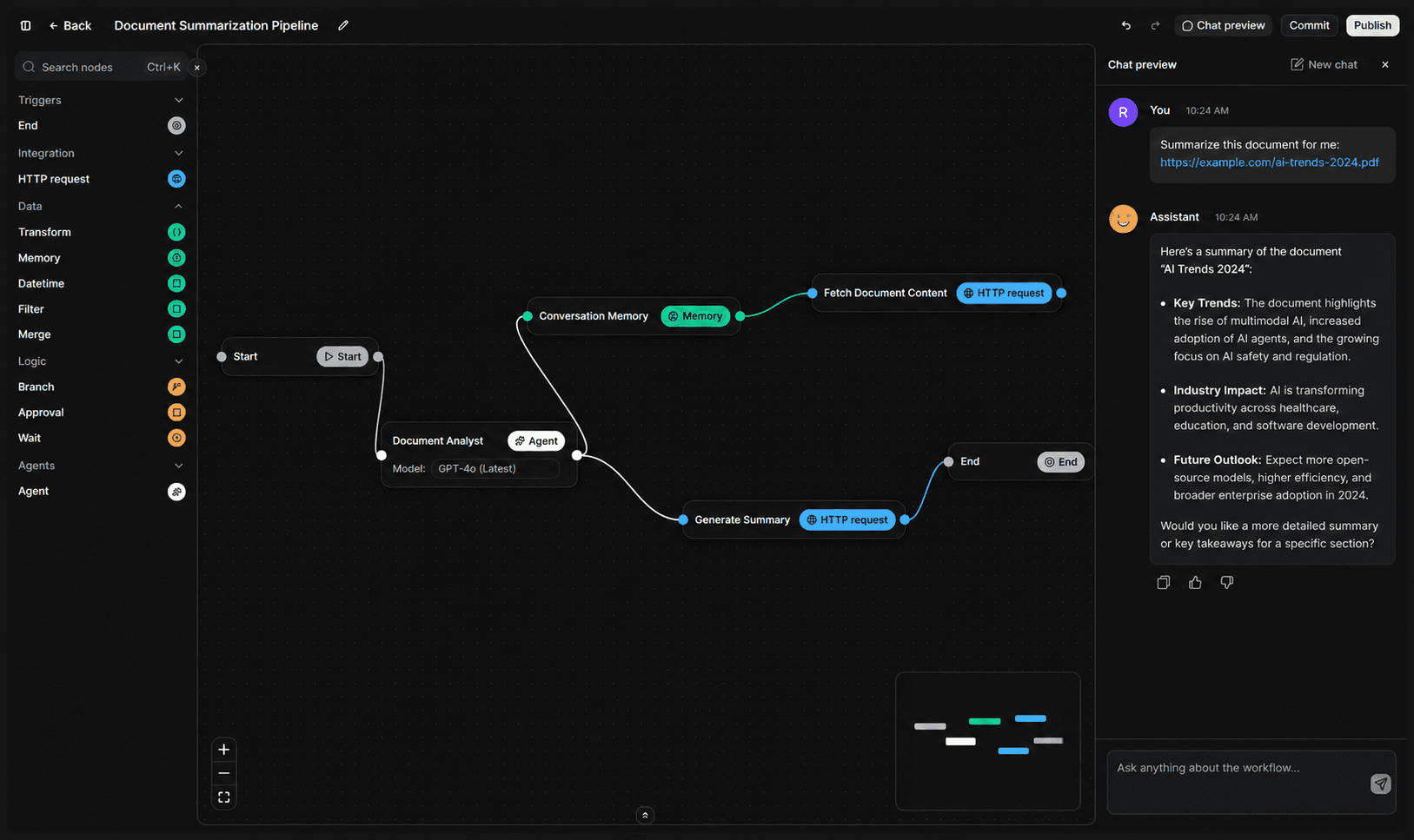
The canvas, the workflow JSON, and the node registry describe one thing. A second editor is fine. A second graph is a second product.
Linea Labs
Aug 12, 2026
An approval pauses the run, not a worker
A paused run releases its lease and holds no worker. It waits until someone decides, then the approval node returns the decision and the run continues from that step.
Linea Labs
Nov 17, 2026
Questions
Questions about this page.
Do I have to use the visual builder?
No. Every published version is a JSON graph the host runs exactly as published. You can author that graph in the visual builder, or create workflows and save drafts and versions through the TypeScript SDK with a workspace API key. Publishing a version and binding it to an environment need a signed-in admin in the dashboard. The SDK also starts executions, reads their results, and verifies webhooks.
What is Linea?
Linea is an agentic runtime and control plane. You ship an agent to your users. Linea executes the workflow graph behind it — model calls, tools, waits, approvals, and memory — and keeps the records around the run: checkpoints, signals, approvals, and regressions.